

Pharmaceutical warehousing is not the same as general storage. Medicines, vaccines, OTC products, biologics, and controlled healthcare goods must be stored, handled, monitored, and distributed under strict quality requirements. A small warehouse issue, such as poor temperature control, weak documentation, or mixed stock segregation, can affect product stability and create serious regulatory risk.
That is why Good Distribution Practice, or GDP, is a core requirement for pharmaceutical warehouse operations in Malaysia. GDP helps ensure that pharmaceutical products remain safe, effective, traceable, and protected from contamination or damage throughout storage and distribution.
For pharmaceutical manufacturers, importers, wholesalers, and healthcare brands, choosing the right warehouse partner is not just about space. It is about compliance readiness, product integrity, audit confidence, and supply chain continuity.
What Makes a Pharmaceutical Warehouse Different from a Standard Warehouse?
A standard warehouse is built to store goods. A pharmaceutical warehouse is built to protect products that directly affect patient health and to prove, through documentation, that those products were handled correctly at every step.
That distinction has regulatory consequences. Any facility in Malaysia used to store pharmaceutical products for distribution must comply with GDP guidelines issued by MOH. Those guidelines govern physical infrastructure, environmental controls, documentation systems, and personnel competency. A facility that cannot meet these standards cannot legally hold pharmaceutical stock for distribution, regardless of how modern or well-maintained it appears.
This applies whether you operate your own warehouse, lease space from a third-party logistics provider, or partner with a full-service distributor. The GDP requirements follow the product, not the business model.
What is GDP in Pharmaceutical Warehousing?
Good Distribution Practice is a quality system that governs how pharmaceutical products are stored, transported, documented, and handled across the distribution chain. In a warehouse setting, GDP covers key areas such as facility design, temperature and humidity control, personnel training, inventory traceability, stock rotation, product segregation, security, sanitation, pest control, complaints, recalls, and documentation.
Physical Infrastructure Requirements
Storage Zone Segregation
A GDP pharmaceutical warehouse is not a single open floor. It is a collection of physically separated zones, each serving a distinct function in the product handling process.
The minimum zone structure under Malaysian GDP guidelines includes a goods receipt and incoming inspection area, where product arriving from suppliers is verified before entering main storage. A quarantine zone for products not yet quality-approved or flagged for investigation physically separated from approved stock, with restricted access. An approved stock area organised for first-expiry-first-out (FEFO) rotation. A rejected and returned goods zone for products that have failed inspection or been recalled, clearly marked and held separately to prevent accidental dispensing. And a controlled substances zone for scheduled poisons and controlled drugs, with additional security requirements including restricted access and auditable entry logs.
Access Control and Security
GDP requires documented, role-based access control across all warehouse zones. This means not only physical locks and CCTV, but records of who accessed which area and when. Access logs are routinely reviewed during inspections. Unauthorised personnel should not enter storage areas unescorted. Visitor logs must be maintained. For controlled substance zones, access is typically limited to a named list of authorised personnel.
Pest Control, Cleaning, and Facility Maintenance
GDP warehouses must have documented pest control programmes, not just a standing contract, but a programme with scheduled visits, treatment records, and monitoring evidence between visits. Cleaning schedules must be documented and followed. HVAC systems, refrigeration units, and monitoring equipment must be on a maintenance schedule with service records on file. These are among the first records inspectors request after temperature logs, and a common source of documentation gaps in otherwise well-run operations.
Temperature and Environmental Control Requirements
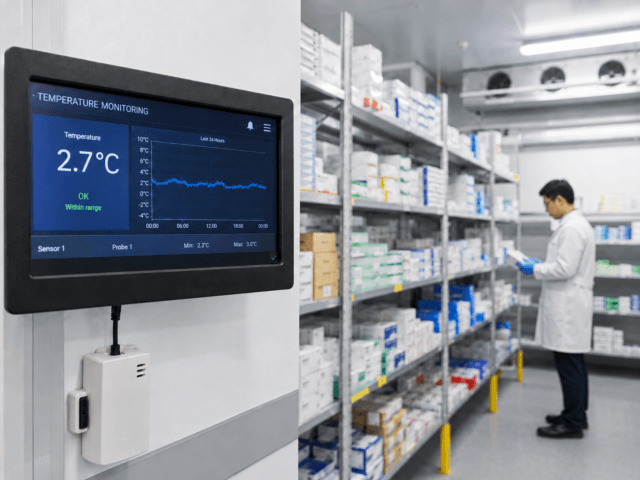
Temperature is the single most scrutinised element of any pharmaceutical warehouse GDP audit. Products stored outside their required temperature range may be unsafe or ineffective and the documentation proving temperature integrity is what separates a compliant operation from a compromised one.
Ambient Storage (15°C–25°C) and The Tropical Climate Challenge
Most solid oral dose forms, topicals, and many OTC preparations are stored at ambient conditions, typically 15°C to 25°C, or up to 30°C for some products as defined in their storage specifications.
In Malaysia, achieving this consistently is harder than it sounds. Ambient outdoor temperatures in the Klang Valley regularly reach 33°C to 37°C. Without active HVAC designed for pharmaceutical storage, warehouse temperatures can exceed the upper ambient limit within hours of a system failure. GDP-compliant ambient storage here requires active climate control, backup power planning, and a documented contingency SOP for HVAC failure.
Refrigerated Storage (2°C–8°C) for Cold Chain Products
Vaccines, certain biologics, insulin, and some diagnostics must be stored continuously between 2°C and 8°C. Refrigerated zones must be equipped with calibrated electronic sensors logging readings every 15 to 30 minutes, with automated alerts configured to trigger before the product reaches the limit boundary. A refrigerated zone with no automated alerts is not meeting GDP standards.
Frozen Storage (below ‒20°C) for Applicable Products
Plasma-derived products, certain gene therapies, and some biologics require frozen storage at −20°C or below. Some mRNA-based products require ultra-cold temperatures at −70°C or lower. The GDP requirements such as continuous monitoring, calibrated sensors, documented excursion response apply at the same standard, with the added complexity of more specialised equipment and higher-value product at risk.
Documentation and Traceability Requirements

Batch Traceability — The Core of GDP Compliance
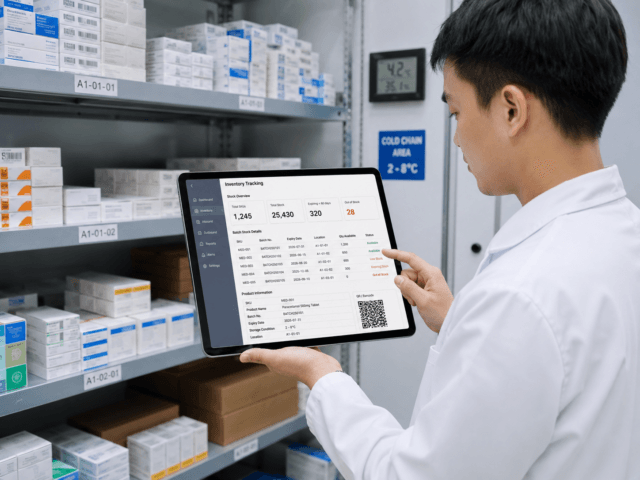
Every movement of pharmaceutical products within a GDP warehouse must be recorded: batch number, expiry date, quantity, and storage location for every item received; a record of every internal movement; and a complete dispatch record for every outbound shipment. The ability to trace any batch from receipt to final delivery is what makes a product recall manageable. A warehouse that cannot produce a complete batch trail within hours of a recall request has a fundamental GDP failure.
Temperature Logs and Equipment Calibration Records
Temperature monitoring records must be continuous and electronically stored. All sensors, data loggers, and thermometers used for GDP monitoring must be calibrated at defined intervals, with certificates current and immediately producible during an inspection. An out-of-date calibration certificate is a formal audit finding even when the equipment is functioning correctly.
Deviation Reports and CAPA Records
Any event outside defined operating parameters, a temperature excursion, a missing batch record, an unauthorised zone entry must be documented as a deviation. Each requires a root cause investigation, a corrective action, and a record that the action was completed. GDP auditors review deviation logs as a measure of how honestly and rigorously an operation monitors itself. A warehouse with no deviation records is not a perfect operation. It is one that is not paying attention.
Why GDP Compliance Matters for Pharmaceutical Companies?
GDP compliance is not just a regulatory requirement. It protects business continuity, patient safety, and brand reputation.
For pharmaceutical companies, a reliable GDP-compliant warehouse can help reduce product loss, prevent regulatory delays, improve audit readiness, support faster recalls, maintain customer trust, and create better visibility across the supply chain.
This is especially important in Malaysia, where pharmaceutical products may move across hospitals, clinics, pharmacies, wholesalers, government agencies, and regional healthcare networks. The more complex the distribution network, the more important it becomes to work with a warehouse partner that understands healthcare logistics.
Choosing a GDP-Compliant Pharmaceutical Warehouse in Malaysia
When choosing a pharmaceutical warehouse provider, check whether they can:
- Handle your product’s temperature requirements
- Provide batch and expiry tracking
- Validate cold chain storage areas
- Manage poison-class or controlled products
- Calibrate monitoring devices regularly
- Support audits, recalls, and documentation requests
- Offer full visibility through a warehouse management system
- Understand Malaysian healthcare distribution requirements
A good pharmaceutical warehouse partner should give you confidence that your products are stored correctly, tracked accurately, and distributed safely.
Frequently Asked Questions
A pharmaceutical warehouse should have suitable premises, controlled storage conditions, temperature and humidity monitoring, product segregation, trained personnel, secure access, pest control, sanitation procedures, batch tracking, stock rotation, and complete documentation.
The primary requirement is a Wholesaler’s Licence from NPRA. Facilities storing medical devices additionally require GDPMD certification from the Medical Device Authority (MDA). Both licences have defined renewal cycles and are subject to GDP inspections by the relevant authorities.
NPRA and MOH conduct scheduled GDP inspections as part of the licence renewal process. Unannounced inspections can occur at any time triggered by complaints, product recalls, or regulatory intelligence. The correct operational posture is to maintain compliance standards every day, not only before a known inspection.
Yes. For most pharmaceutical distributors and brand owners entering Malaysia, this is the more practical approach. Partnering with a licensed GDP-certified warehouse operator allows you to operate within a compliant infrastructure immediately, without the capital investment in facility build-out and monitoring systems. Confirm the third party’s WDL status and ask to see their most recent GDP inspection report before committing.
Temperature mapping identifies hot and cold spots in a storage area. This helps determine where monitoring sensors should be placed and confirms that the warehouse can maintain the required product storage conditions.
A general warehouse may not be suitable unless it meets GDP requirements. Pharmaceutical products require controlled storage, traceability, trained personnel, security, proper documentation, and product-specific handling procedures.
Ready to Store Your Pharmaceutical Products in a GDP-Compliant Warehouse?
Octopus Distribution operates GDP-certified pharmaceutical warehousing in Malaysia with continuous temperature monitoring, full batch traceability, and integrated distribution. Contact our team to discuss your warehousing and distribution requirements.





