

Maintaining pharmaceutical products at the correct temperature is only one part of cold chain logistics. Malaysian distributors must also prove that every product was received, stored, packed, transported and delivered according to its approved conditions.
A cold room operating between 2°C and 8°C does not automatically make an operation GDP-compliant. The distributor also needs qualified facilities, calibrated monitoring equipment, trained personnel, written procedures, traceable records and a documented response when something goes wrong.
GDP compliance therefore applies across the entire distribution chain, from goods receipt and storage to loading, transportation and final delivery.
What Is GDP Compliance in Pharmaceutical Logistics?
Good Distribution Practice, or GDP, refers to the controls used during pharmaceutical storage, transportation and distribution to preserve product quality and integrity until the products reach their intended users.
In Malaysia, GDP applies to activities such as:
- Supplier and customer approval
- Goods receiving and inspection
- Pharmaceutical storage
- Stock rotation and inventory control
- Transportation and delivery
- Complaints, returns and recalls
- Outsourced logistics activities
- Documentation and record keeping
- Internal audits and self-inspections
Additional controls apply to time- and temperature-sensitive products, often abbreviated as TTSP. These products may lose quality, stability or effectiveness when exposed to conditions outside their approved temperature or time limits.
Examples include vaccines, insulin, biologics, selected injectable medicines, clinical-trial products and certain pharmaceutical reagents.
Who Must Follow GDP Requirements in Malaysia?
GDP responsibilities are not limited to companies that own warehouses. They apply to organisations involved in pharmaceutical storage and distribution, including:
- Importers and exporters
- Wholesale distributors
- Third-party logistics providers
- Freight forwarders
- Road, sea and air transport providers
- Pharmacies and healthcare facilities storing medicines before use
Importers and wholesalers remain responsible for work performed by outsourced providers. Appointing an external warehouse or transport company does not transfer regulatory responsibility away from the licence holder.
Pharmaceutical companies must therefore assess whether their logistics partners are properly authorised, operationally capable and able to provide records demonstrating compliance.
GDP Requirements for Cold Chain Transport
Transport is one of the highest-risk stages because products leave the controlled warehouse environment and may face traffic delays, loading-bay exposure and repeated door openings.
Vehicle Qualification and Thermal Mapping
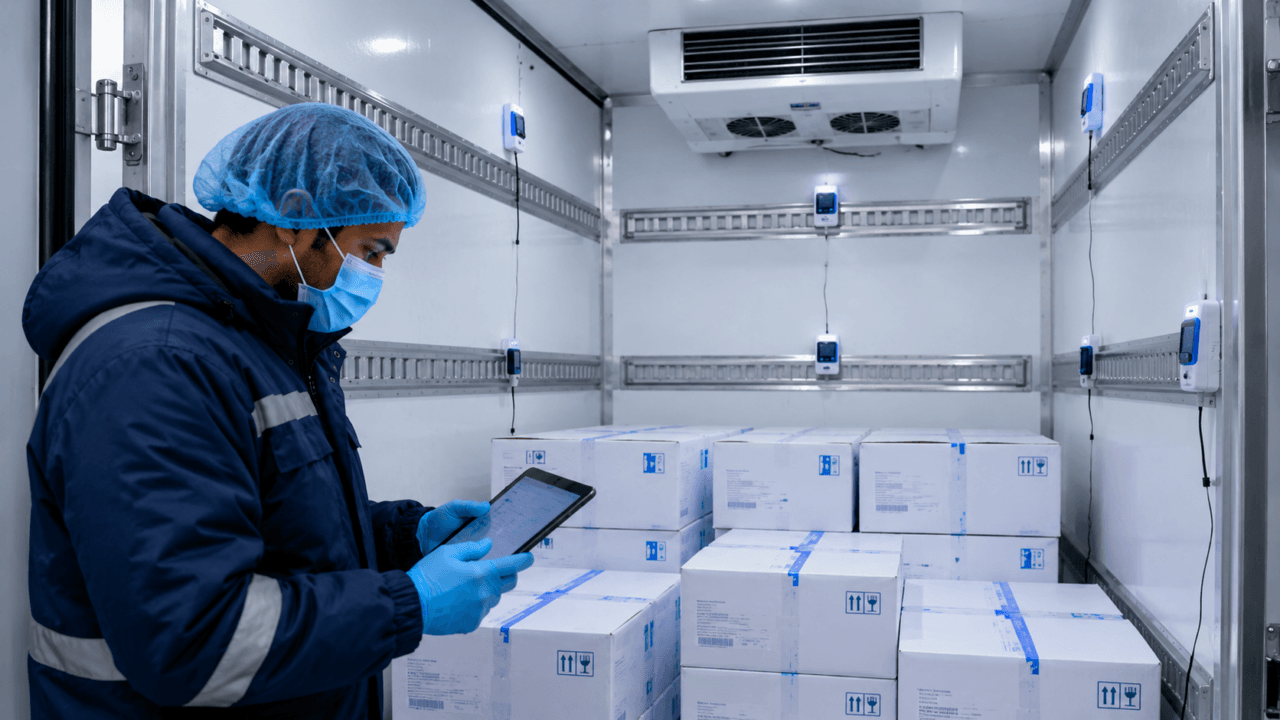
Vehicles used for pharmaceutical cold chain deliveries should be formally qualified. Thermal mapping measures temperature distribution throughout the vehicle under representative conditions, such as:
- High external temperatures
- Maximum product load
- Longest intended route
- Normal door-opening patterns
- Worst-case delivery duration
The results identify hot and cold spots, suitable sensor locations, loading requirements and maximum transit times. Qualification should be reviewed when the vehicle, refrigeration unit, route or operating conditions change significantly.
Pre-Cooling and Loading Procedures

Vehicles must reach the required operating temperature before products are loaded. The loading procedure should define:
- When pre-cooling begins
- The temperature required before loading
- Maximum transfer time from warehouse to vehicle
- Approved packaging configuration
- Sensor and data-logger placement
- Batch information to be recorded
- Actions when loading is delayed
In Malaysia’s climate, loading products into an unprepared vehicle can create a temperature event before the journey begins.
In-Transit Monitoring
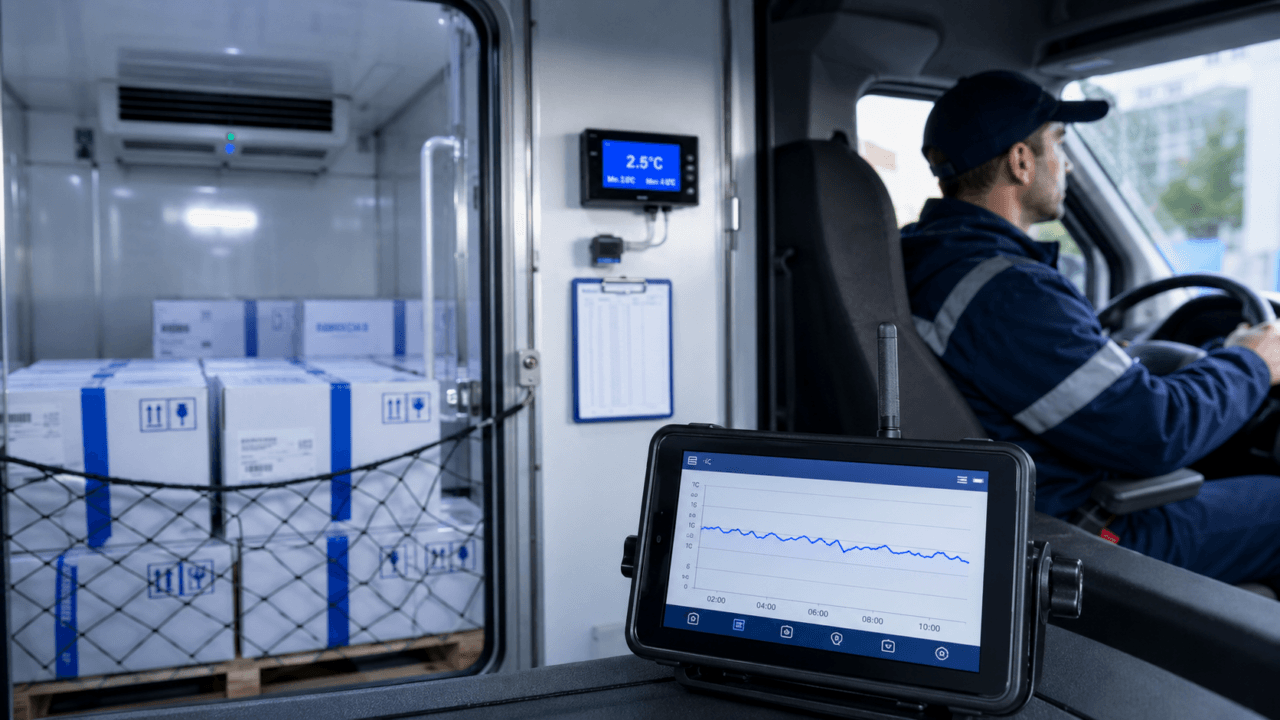
Temperature monitoring must continue for the full delivery journey, including delays and waiting time at the destination. A suitable transport system should provide continuous records linked to the specific shipment. Where real-time alerts are used, the response procedure should identify who receives the alert and what action must be taken.
The distributor should also define what happens when:
- Traffic causes significant delays
- The vehicle breaks down
- A recipient is unavailable
- A delivery is rejected
- The route includes multiple stops
- A hospital loading bay is congested
Delivery Handover

The final handover should be documented. Delivery records should identify the recipient, product, batch number, quantity, delivery time and relevant temperature information. Any delay, unusual handling condition or rejected delivery should be recorded and escalated when necessary.
GDP Cold Chain Storage Requirements — The Foundation
The warehouse is where the cold chain starts, and GDP storage requirements for cold chain products are covered in full in our guide to pharmaceutical warehouse temperature requirements. The core requirements for cold chain context are:
Refrigerated Zone GDP Standards
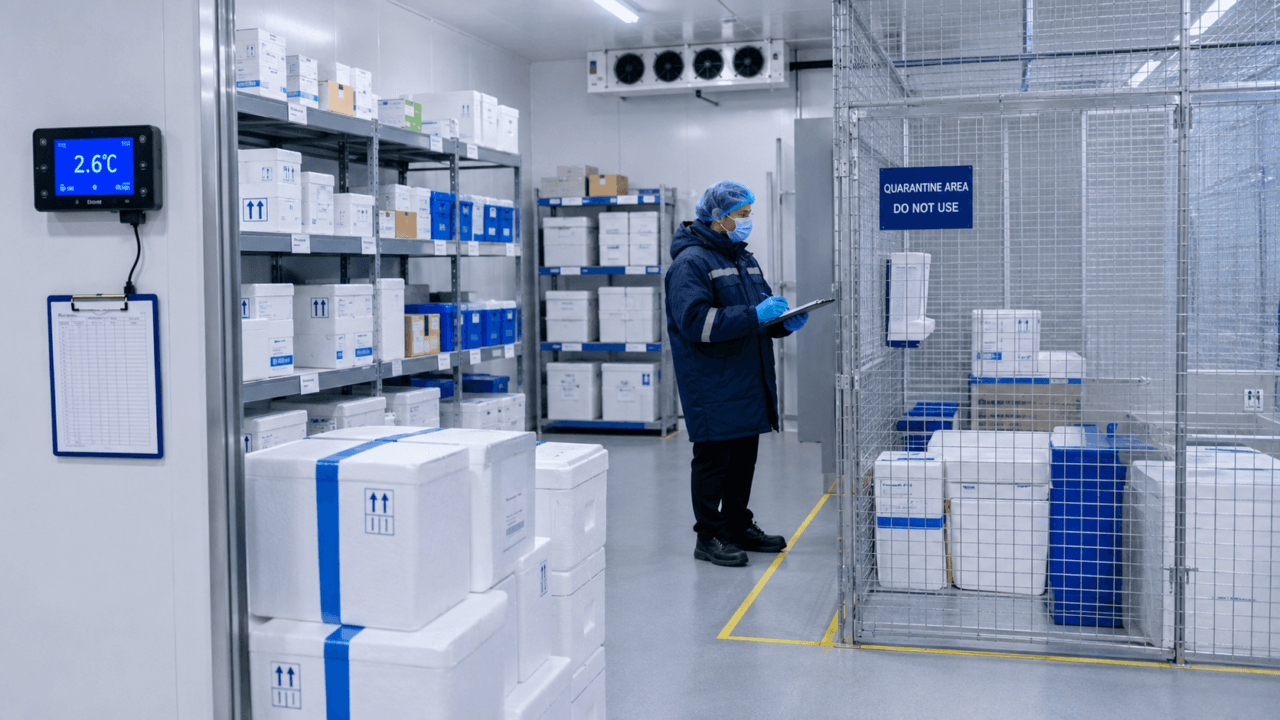
Calibrated electronic sensors placed at representative points within the refrigerated zone, logging readings at defined intervals. Automated alerts configured at pre-limit thresholds not at the limit itself. Quarantine zone capability for excursion-affected products. Backup power or a documented HVAC failure contingency with defined escalation steps.
Calibration Records — The Requirement That Spans Storage and Transport

Every sensor used for GDP cold chain monitoring whether in a warehouse zone or a transport vehicle must be calibrated at defined intervals against certified reference standards. Calibration certificates must be current at all times and on file for immediate production during an inspection. A calibration management SOP with a named responsible person is the practical minimum for any multi-zone, multi-vehicle cold chain operation.
Managing Temperature Excursions
A temperature excursion occurs when a product is exposed to conditions outside its approved range. The product should not automatically be released or destroyed. It should first be quarantined while the impact is assessed.
A typical GDP response involves:
- Recording the temperature and duration
- Quarantining the affected batches
- Securing temperature and shipment records
- Investigating the root cause
- Reviewing product stability information
- Obtaining a release, rejection or disposal decision
- Documenting the decision and its basis
- Implementing corrective and preventive action
The final decision should be made by an authorised pharmacist, quality manager, manufacturer or product owner using product-specific evidence. Corrective and preventive action, or CAPA, should address the root cause. Replacing affected stock does not resolve an overdue calibration, an incorrect alert setting or an untrained driver.
Documentation Malaysian Distributors Must Maintain
Cold chain GDP compliance depends heavily on complete and retrievable records. Key documents include:
- Storage and transport temperature logs
- Calibration certificates
- Temperature-mapping and qualification reports
- Equipment maintenance records
- Alarm and backup-system test records
- Goods-receiving records
- Packing and dispatch records
- Vehicle and delivery information
- Training records
- Excursion investigations and CAPA reports
- Chain-of-custody records
- Return, recall and disposal records
- Current standard operating procedures
- Self-inspection reports
Records should be accurate, dated, protected from unauthorised changes and linked to the relevant product or shipment.
Control of Outsourced Cold Chain Activities
Pharmaceutical companies may outsource warehousing, transport or last-mile delivery, but the licence holder remains responsible for ensuring those activities comply with GDP. A written agreement should define:
- The activities being outsourced
- Responsibilities of each party
- Required storage and transport conditions
- Temperature-monitoring requirements
- Deviation-reporting timelines
- Access to records
- Audit rights
- Recall responsibilities
- Controls over further subcontracting
The provider’s performance should be reviewed regularly rather than assessed only during the initial appointment.
Cold Chain GDP Audit in Malaysia: What Inspectors Focus On
The 5 most common cold chain GDP audit findings in Malaysian operations
In our experience managing GDP-certified cold chain operations in Malaysia, these are the five areas where distributor compliance most frequently falls short:
1. No vehicle qualification or thermal mapping records.
Transport vehicles are used for cold chain delivery without documented qualification. This is the most commonly cited finding in cold chain transport GDP reviews and the one that takes the most operational investment to correct properly.
2. Pre-limit alert thresholds not configured.
The monitoring system alerts at the temperature limit, not before it. This eliminates the response window that pre-limit alerts exist to provide.
3. Excursion log incomplete or CAPA records missing.
Excursions are recorded but the investigation, disposition decision, or corrective action documentation is absent. A partial excursion record is a GDP finding in itself.
4. Calibration certificates out of date for transport data loggers.
Warehouse sensors are calibrated on schedule; transport loggers are not on the same tracking system. The calibration gap in a mobile fleet is a practical challenge that requires its own SOP.
5. Loading procedures not documented or not consistently followed.
The SOP exists; the practice does not consistently match it. Vehicle pre-cooling skipped, loading dock exposure times unrecorded, batch numbers not documented at loading.
Preparing for a Cold Chain GDP Inspection
Before an inspection, distributors should review whether:
- All calibration certificates are current
- Temperature logs are complete and retrievable
- Excursion files include investigations, decisions and CAPA
- Vehicle qualification records cover the active fleet
- Storage mapping reflects the current layout
- Alarm and backup systems have been tested
- SOPs are current and accessible
- Personnel understand their responsibilities
- Outsourced activities are covered by written agreements
- Batch traceability can be demonstrated from receipt to delivery
Inspection readiness should be maintained throughout the year rather than created only after an inspection is announced.
Frequently Asked Questions
No. Cold chain capability is required when a distributor handles products with approved temperature-controlled storage or transport conditions.
No. GDP also covers quality systems, personnel, qualification, calibration, monitoring, transport, documentation, outsourced activities and excursion management.
Yes. However, the licence holder must assess and monitor the transport provider. Responsibilities and reporting requirements should be defined in a written agreement.
Vehicles do not usually receive individual GDP certificates, but the distributor must demonstrate that they are qualified, monitored, maintained and operated according to GDP requirements.
Required records include continuous electronic temperature logs for all storage and transport events; current calibration certificates for all monitoring sensors and data loggers; chain of custody records for every product movement from receipt to delivery; an excursion log with complete investigation and CAPA records; vehicle qualification and thermal mapping documentation; and a current SOP library covering all cold chain operations, each dated and reviewed within twelve months.
Build Compliance into Every Stage of the Cold Chain
GDP compliance is not achieved by keeping a cold room within range on an ordinary day. It is demonstrated by how the distributor controls routine operations, responds to unexpected events and produces evidence that each product was protected.
For pharmaceutical manufacturers, product-registration holders and healthcare brands, the right distribution partner should be able to demonstrate:
- Qualified facilities
- Reliable monitoring
- Validated transport
- Product traceability
- Effective excursion management
- Inspection-ready documentation
Octopus Distribution provides integrated GDP-compliant cold chain logistics in Malaysia, combining temperature-controlled warehousing, monitored transportation, validated packaging and inventory traceability for pharmaceutical and healthcare products.
Contact Octopus Distribution to discuss cold chain storage and distribution requirements tailored to your product specifications, delivery routes and regulatory responsibilities.





